Periodic Inventory

| Under the periodic inventory system, the amount of inventory on hand is determined periodically, usually once a year. |
Periodic inventory maintains the beginning inventory balance throughout the year. New inventory purchases are recorded in the “purchases” account, and at year end an inventory count is taken to determine the ending inventory balance and the cost of goods sold.
Periodic Inventory and Inventory Cost (Cost of Goods Sold)
The following formula is used to determine inventory cost of goods sold:
| Beginning Inventory + Purchases – Ending Inventory = COGS |
*A Note on Beginning Balances* In accounting, the beginning balance always refers to the balance as of the beginning of the year before any new transactions for the year are recorded. Consequently, the beginning balance for inventory, or accounts receivable, or equity, or any other real (balance sheet) account is always the same as the balance as of the end of the prior year, carried forward as the beginning balance in the new year.
For periodic inventory, this is important because the ending inventory balance was adjusted to a physical count last year, and carried forward to the beginning inventory balance. This inventory balance will remain the same throughout the year, as new products purchased are recorded in the purchases account, and later adjusted to inventory based on a new inventory count at year end.
In January, for example, even though Sunny had purchased $4,500 on the first day of business, January 1, 2010, as listed on the January sample balance sheet, this amount does not represent the beginning inventory balance since the ending inventory as of December 31, 2009 was zero. Rather, this amount is included as part of total purchases made throughout the year when using periodic inventory.
Let’s see how Sunny Sunglasses would calculate inventory cost of goods sold for 2010 using periodic inventory accounting.
Throughout the year, Sunny had net purchases of $48,825 in total inventory. Ending inventory listed on the accounting balance sheet analysis page at year end equaled $5,625. Therefore, we can calculate inventory cost of goods sold as:
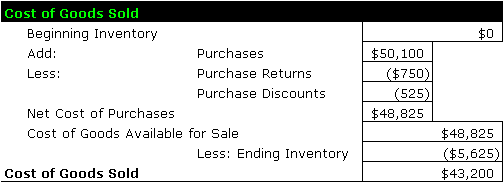
Calculate Inventory Cost of Goods Sold
Total inventory cost of goods available for sale during 2010 was the beginning inventory plus all purchases made throughout the year less purchase returns and discounts. Because the ending inventory had a balance as of December 31, 2010, this amount is subtracted to arrive at the total cost of goods sold.
Accounting Examples of Inventory Cost
|
Periodic Inventory Accounting Examples
The following journal entries illustrate how companies use periodic inventory reporting.
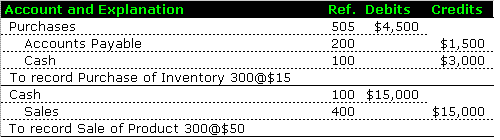
Periodic Inventory Accounting Examples: Inventory Purchase and Sale
In the accounting journal entry above, purchases are made and the items are then sold. Companies using periodic inventory do not adjust the actual inventory balance until adjusting entries are made at year end. Companies record an inventory purchase under the periodic inventory system by debiting the purchases account, and sales are made with no adjustment to the inventory account. The perpetual inventory system, by contrast, adjusts the inventory balance when items are both purchased and sold.
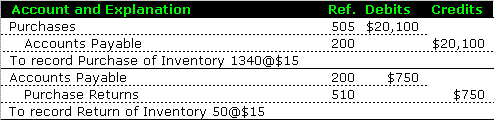
Periodic Inventory Accounting Examples: Inventory Returns
Under periodic inventory reporting, purchase returns are recorded in a contra account to adjust total purchases. A contra account is an account that offsets the main account. Since the purchases account is a debit account, the contra account is a credit account that offsets the balance to determine net purchases. The purchases account has two contra accounts: purchase returns and purchase discounts.
In this example, Sunny reduces accounts payable with a debit, and credits the contra account purchase returns to reduce the purchases balance.
The purchases account and its contra accounts are simply a replacement for the inventory account using periodic inventory reporting. Under the perpetual inventory system, any purchase returns or discounts reduce the inventory account directly.
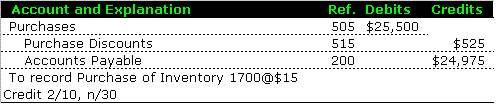
Inventory Accounting: Periodic Inventory and Discounts
Similarly, purchase discounts are credited to reduce the purchases balance. In this example, Sunny purchased product with a 2% discount when paid within 10 days (2/10), with full payment due within 30 days (n/30). Discounts encourage quicker payment of items purchased on credit. Purchase discounts are recorded in the contra account purchase discounts.

Periodic Inventory Accounting: Inventory Cost (Cost of Goods Sold)
Even though Sunny Sunglasses Shop had no beginning inventory, in this example it is important to note that any beginning inventory is closed (credited) to inventory cost of goods sold when using periodic inventory reporting.
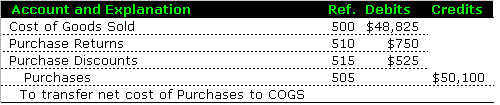
Periodic Inventory Accounting Examples: Closing the Inventory Purchase Accounts
Purchases and its contra accounts, purchase returns and purchase discounts, are temporary accounts closed to cost of goods sold at year end. Since the purchases account is a debit account, it is closed with a credit to the balance. Similarly, the contra accounts are credit accounts that are closed with debit entries. The balance reflects net purchases closed to cost of goods sold ($48,825).

Periodic Inventory Accounting Examples: Inventory Count and Ending Inventory
At the end of the year, Sunny takes an inventory count to determine the ending inventory balance of $5,625. Since this amount reflects goods available for sale that were not sold, this amount is debited to inventory to record the amount as an asset, and credited to cost of goods sold to reduce the amount recorded as cost of goods sold in the previous entries.
At the beginning of next year, the beginning inventory balance is $5,625. Cost of goods sold is recorded on the 2010 profit and loss statement as $43,200.
From Periodic Inventory Reporting to the Perpetual Inventory System
Back to the Inventory Accounting Main Page
Online Accounting|Business Accounting Home Page
