
| When the perpetual inventory system is used, there is a continuous or perpetual record of inventory recorded in the inventory account. |
When a company purchases product, it is immediately recorded as inventory. When the products are sold, the inventory balance is immediately reduced (credited) and recorded in cost of goods sold.
Whereas the periodic inventory system uses the purchases account and its contra accounts to record net purchases throughout the year (purchases less returns and discounts in the contra accounts), the perpetual inventory system records all transactions affecting inventory directly in the inventory account, including all purchases, sales, inventory returns and inventory discounts.
Inventory Accounting: Periodic Inventory vs. Perpetual Inventory Reporting
Using the perpetual inventory system has several distinct advantages over periodic inventory:
|
Small business accounting software packages make it much simpler and cost-effective to monitor inventory levels using the perpetual inventory system throughout the year.
Perpetual Inventory and the Inventory Count
Though an inventory count should be taken once a year to measure and match inventory records, the perpetual inventory system does not depend on this count to determine cost of goods sold, but is used to verify inventory records. Therefore, a potentially costly and time-consuming year-end inventory count that may interfere with normal business operations is not required. Rather, when a company uses the perpetual inventory system, a physical inventory count can be made routinely throughout the year to match perpetual inventory reporting records.
Perpetual Inventory Accounting Examples
The following journal entries illustrate the perpetual inventory system. The two main differences between the perpetual inventory journal entries and the periodic inventory journal entries are that:
- The periodic inventory system uses a purchases account, whereas perpetual inventory uses the inventory account directly.
- Using perpetual inventory adds another journal entry after a sale to reduce the inventory balance, whereas the periodic inventory system adjusts the inventory balance at year end after a physical count of inventory items.
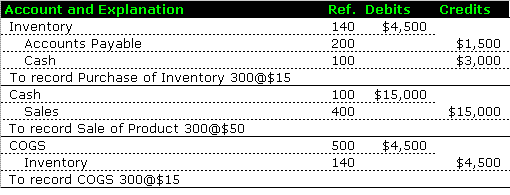
Items purchased for resale are recorded directly in the inventory account in the perpetual inventory system. Additionally, a journal entry is added to reduce the inventory balance based on the number of items sold, in this case 300 units @$15 each.

In the above example, a return of inventory directly reduces the inventory balance with a credit for the returned items. Companies using periodic inventory, on the other hand, reduce the purchases account with a credit to the contra account purchase returns.
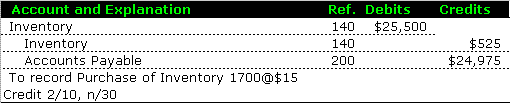
Similarly, items purchased at a discount directly reduce the inventory balance with a credit to inventory. In this example, Sunny purchased product with a 2% discount when paid within 10 days (2/10), with full payment due within 30 days (n/30).
Discounts encourage quicker payment of items purchased on credit. Companies using periodic inventory, by contrast, record discounts by reducing the purchases account with a credit entry to the contra account purchase discounts.
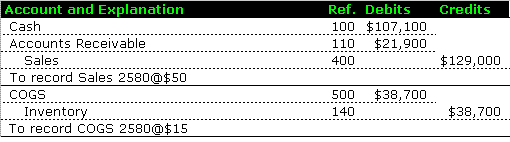
When the inventory purchases and sales are complete for the year, both the perpetual inventory system and periodic inventory reflect an ending balance of $5,625 for ending inventory and $43,200 for cost of goods sold ($38,700 + $4,500).
Inventory Planning
Inventory planning is important to both meet demand and maximize sales. Accurate inventory planning prevents too much inventory that can tie up cash and risk inventory obsolescence, write-downs, and price reductions that lead to lower profit margins. Inventory turnover is a financial ratio used for inventory planning to monitor adequate inventory levels.
From the Perpetual Inventory System to the Periodic Inventory System
Back to the Inventory Accounting Main Page
Back to the Accounting Terms Main Page
Online Accounting and Business Accounting Home Page